
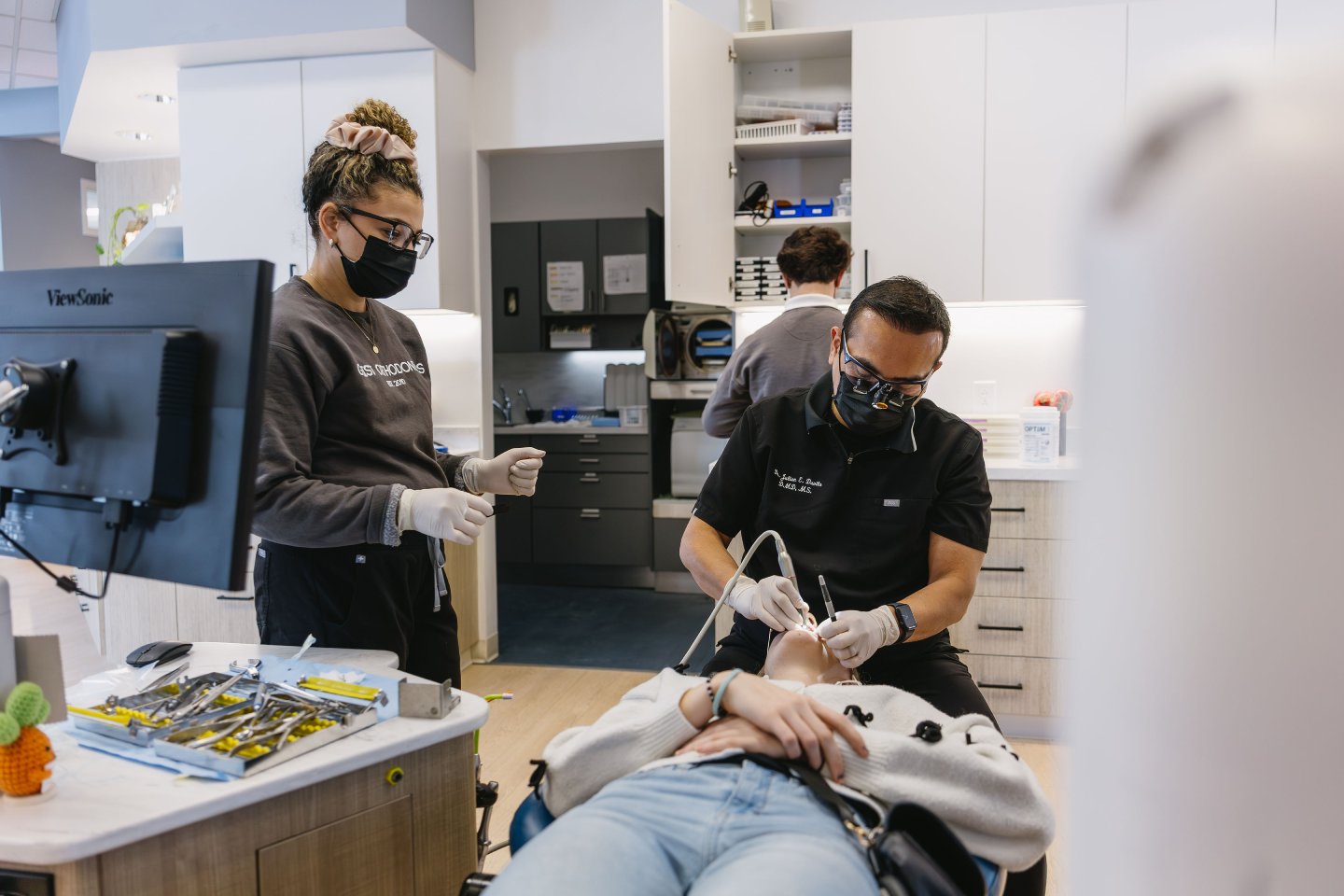
Finding the right orthodontist can feel overwhelming when you’re scrolling through dozens of options online. You want someone who’s genuinely skilled, not just good at marketing. A few smart steps can help you identify a truly top-rated orthodontist in the north Indianapolis area who will deliver confident, lasting results.
What Makes an Orthodontist “Top-Rated”?
A top-rated orthodontist is one who combines advanced specialty training with consistently positive patient experiences, proven treatment outcomes, and a wide range of treatment options suited to patients of all ages. These qualities separate a great orthodontist from one who simply has a polished website. Here are the quality signals worth looking for:
- Board certification through the American Board of Orthodontics (ABO), which requires passing rigorous written and clinical examinations
- Active AAO membership. The American Association of Orthodontists sets the standard for specialty practice.
- Strong patient reviews across multiple platforms, with detailed feedback about results, communication, and the overall experience
- Modern treatment options like braces, clear aligners, two-phase treatment for children, and specialized care like airway orthodontics
Here’s an important distinction to understand. All orthodontists are dentists, but not all dentists are orthodontists. After completing dental school, orthodontists go through an additional two to three years of specialized residency training focused exclusively on tooth movement, jaw alignment, and facial development. That extra education matters when you’re dealing with anything beyond basic alignment. At Geist Orthodontics, our specialists completed this advanced training, and it shows in the care plans they create for families across north Indianapolis.
You also want a practice that offers more than one treatment type. That way your care plan is built around your smile, not around whatever the smile center happens to have available.
How to Find and Evaluate a Top-Rated Orthodontist
Here’s a practical approach to finding the right orthodontist for you or your family:
Verify credentials first
Check that the orthodontist completed an accredited orthodontic residency program. You can search the ABO directory to confirm board certification. This step helps you rule out dentists offering orthodontics without specialty training.
Patient reviews tell you a lot, so read them carefully and look beyond star ratings. Pay attention to what families say about communication, wait times, treatment outcomes, and how the team handles concerns. Google reviews are particularly helpful because they’re harder to manipulate.
Practices where the orthodontist or team responds thoughtfully to feedback tend to deliver a better overall experience. That kind of engagement signals a practice that genuinely cares about patient satisfaction.
What treatment approaches does the practice offer? A quality orthodontist should provide traditional metal braces, ceramic braces, Invisalign, lingual braces, and options for different age groups. Practices with limited options may steer you toward treatments that aren’t the best fit for your case.
At Geist Orthodontics, a complimentary consult gives you the chance to evaluate the environment, meet the orthodontist, and ask questions before committing. Does the smile center feel welcoming when you walk in? Does the team explain things clearly without rushing you? This step alone tells you a lot about whether a practice is the right fit.
Ask about advanced tools, too. Modern practices use digital scanning instead of goopy impressions. They may offer 3D treatment planning and remote monitoring tools. These advanced tools improve comfort and precision while often reducing overall treatment time.
Benefits of Choosing a Highly Rated Orthodontist
The difference between a top-rated orthodontist and whoever’s closest shows up in your results, your experience, and your long-term oral health.
What Treatment Options Do Top-Rated Orthodontists Offer?
Highly rated orthodontists typically offer everything from traditional braces to Invisalign to specialized care like airway orthodontics and TMJ treatment. This means your personalized care plan addresses your specific needs rather than forcing a one-size-fits-all solution. Think of it this way: the more tools an orthodontist has, the more precisely they can match the right approach to your case.
According to the American Association of Orthodontists, orthodontic specialists complete thousands of hours of additional training in tooth movement and jaw alignment. This expertise translates to more predictable results and fewer complications. That matters.
How Does Personalized Care Improve the Treatment Experience?
The best orthodontists take time to understand your goals, lifestyle, and concerns. A teen athlete needs different considerations than a working professional. A child with early bite issues needs a different approach than an adult seeking cosmetic improvement.
Top-rated practices earn their reputations through transparent pricing, honest timelines, and responsive teams. You’ll know what to expect at every stage. Digital scanning and remote check-ins mean fewer visits, less discomfort, and more efficient treatment in many cases. That kind of comfort makes a real difference in how you feel about the whole process.
Orthodontist vs. General Dentist vs. DIY Aligners: How They Compare
| Factor | Orthodontist | General Dentist | DIY Aligners |
|---|---|---|---|
| Training | 2-3 years specialty residency after dental school | Dental school only | None (no in-person exam) |
| Case Complexity | Handles simple to severe cases including surgical needs | Typically limited to mild cases | Mild cosmetic cases only |
| Supervision | In-person monitoring throughout treatment | Varies by practice | Remote or no supervision |
| Bite Correction | Full expertise in jaw alignment and bite issues | Limited training | Cannot address bite problems |
| Safety | Thorough evaluation prevents complications | Depends on provider experience | No physical exam increases risks |
The orthodontists at Geist Orthodontics handle cases across this full complexity range, from simple alignment to complex bite correction requiring surgical coordination.
Here’s the reality: general dentists may offer clear aligners, but they haven’t completed the specialized training needed for complex bite correction. DIY aligner companies skip in-person examinations entirely, which means serious issues like gum disease, bone loss, or bite problems can go undetected.
For mild cosmetic adjustments, a general dentist might work fine. But if you have any complexity in your bite, spacing, or jaw alignment, an orthodontist’s specialized training makes a real difference in your outcome.
What Affects the Investment in Orthodontic Treatment?
The investment in orthodontic treatment depends on treatment type, case complexity, duration, and insurance coverage. Metal braces typically run less than Invisalign or ceramic options, and your orthodontist will provide a personalized estimate during your complimentary consult at Geist Orthodontics. Here are the main factors that affect pricing.
Treatment type
Treatment type plays a big role. Metal braces are generally the most flexible option price-wise, while ceramic braces and Invisalign run higher. Lingual braces, which sit behind the teeth, and surgical orthodontic cases tend to carry the highest investment due to their complexity.
How complex your case is and how long treatment takes go hand in hand. A straightforward alignment case requiring 12 months of treatment will be less than a complex bite correction taking 24 months or longer.
Insurance coverage varies significantly, too. Many dental insurance plans include orthodontic benefits, but coverage amounts and age limits differ. In-network options may offer better rates. Ask your insurance company about lifetime maximums and waiting periods before you commit.
At Geist Orthodontics, flexible payment options help make treatment accessible for families across the north side of Indianapolis. Look for practices with transparent pricing and no hidden fees, so you know exactly what you’re paying upfront. And because many top-rated orthodontists offer complimentary consults, you can compare practices and get personalized estimates without financial commitment.
Who Should See an Orthodontist? Signs It’s Time to Schedule a Visit
Orthodontic care isn’t just for teenagers with crowded teeth. Here’s who benefits from a visit:
Children by age 7
The AAO recommends every child have an orthodontic evaluation by age seven. A board-certified orthodontist at Geist Orthodontics can identify developing problems while the jaw is still growing, potentially simplifying treatment later. Early evaluation gives your child the best chance at a smooth treatment process down the road.
Teens and adults with alignment concerns
Crowding, spacing, overbite, underbite, crossbite, or open bite are all treatable at any age. Nearly one in four orthodontic patients today is an adult, so you’re never “too old” for treatment.
Anyone experiencing jaw pain or TMJ symptoms
Clicking, popping, or pain in the jaw joint may point to bite problems that orthodontic treatment can address.
Anyone unhappy with their smile
If you hide your teeth in photos or feel self-conscious when you smile, that’s reason enough to explore your options. Schedule a complimentary consult to determine whether treatment is right for you or your child.
Frequently Asked Questions About Finding an Orthodontist
How do I know if an orthodontist is board certified?
Search the American Board of Orthodontics directory at americanboardortho.com. Board certification means the orthodontist passed rigorous written and clinical examinations beyond their residency training. It’s a voluntary credential that shows they went above and beyond their training requirements.
What questions should I ask at a complimentary consult?
Ask about treatment options for your specific case, expected timeline, total pricing including retainers, financing options, and what happens if you need refinements. At Geist Orthodontics in north Indianapolis, you can also ask who you’ll see at visits and how the practice handles emergencies. Bringing a list of questions helps you make the most of your time.
Is Invisalign as effective as braces?
In most cases, absolutely. Invisalign handles crowding, spacing, overbites, underbites, and crossbites well. Where it sometimes falls short is with significant tooth rotation or vertical movement, and in those situations braces may get you better results. Your orthodontist can recommend the best option based on your specific bite and alignment needs.
How long does orthodontic treatment typically take?
Most orthodontic treatments take 12 to 24 months, though this varies based on case complexity. Simple alignment cases may finish faster, while complex bite corrections take longer. Your orthodontist will provide a personalized estimate during your complimentary consult.
Do orthodontists treat adults?
Absolutely. Adult orthodontic treatment has grown significantly in recent years. Modern options like clear aligners and ceramic braces make treatment more discreet than ever. Healthy teeth can be moved at any age, and many adults find that improving their smile boosts both confidence and oral health. Families across the north Indianapolis area regularly visit Geist Orthodontics for adult treatment alongside their children’s care.