
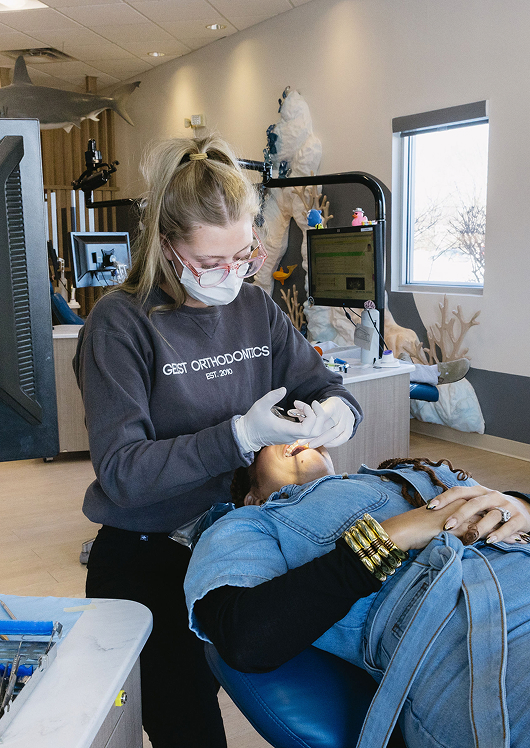
Yes, adults can absolutely get braces or clear aligners. There’s no age limit for orthodontic treatment. If you have healthy teeth and gums, you’re likely a candidate for guiding your teeth into place, whether you’re 25, 45, or 65.
Many adults assume braces are just for kids or teens, but that’s not the case. According to the American Association of Orthodontists, nearly one in four orthodontic patients today is an adult. That number continues to grow as more people across the Fishers, Indiana area and beyond discover the value of orthodontic treatment for both health and aesthetics.
Adult orthodontic treatment addresses the same concerns as teen treatment: crowding, spacing, overbites, underbites, crossbites, and cosmetic alignment issues. Modern options make treatment more comfortable and discreet than ever. Patients can choose from traditional metal braces, ceramic braces with tooth-colored brackets, or clear aligners like Invisalign.
Our orthodontists work with adult patients every day, including families throughout northeast Indianapolis and the surrounding communities. We understand that your needs and lifestyle differ from a teenager’s. That’s why we create a personalized care plan built around you, designed to match your goals, schedule, and preferences.
Yes, Adults Can Absolutely Get Braces or Clear Aligners
If you’ve been wondering whether adults can get braces or clear aligners, the short answer is yes. Orthodontic treatment works at any age, and the options available today are more comfortable, more discreet, and more flexible than what most people remember from their teenage years. Whether you’re dealing with crowding that’s gotten worse over time, a bite that doesn’t feel right, or teeth that shifted after previous treatment, there’s a path forward. Adults make up a growing share of orthodontic patients for good reason: the results are just as effective, and the experience fits into a busy adult life better than you might expect.
How Can Adults Get Braces or Clear Aligners to Work for Them?
Braces and aligners move teeth the same way: steady, light pressure over weeks and months. That part’s straightforward. The difference is how that pressure gets delivered.
How Do Traditional and Ceramic Braces Work?
Braces use brackets bonded to your teeth and connected by archwires. At regular check-ins, your orthodontist adjusts these wires, gradually shifting your teeth into alignment. Metal braces remain the most versatile option for complex cases. Ceramic braces work the same way but use tooth-colored or clear brackets that blend with your smile.
For adults, braces offer predictable results without requiring you to remember to wear anything. Once they’re on, they work around the clock.
How Do Clear Aligners Work?
Clear aligners like Invisalign take a different approach. A series of custom-molded plastic trays are worn in sequence, with a new set every one to two weeks. Each tray moves your teeth slightly closer to the final position.
The removable design means you can take them out for meals, brushing, and special occasions. To stay on track, though, you’ll need to wear them 20 to 22 hours daily.
What Should You Expect with Adult Treatment?
Adult treatment timelines typically range from 12 to 24 months, depending on the complexity of your case. Some minor corrections can be completed in as few as six months, while more involved cases may take longer.
Digital scanning eliminates uncomfortable impressions and allows for precise 3D personalized care planning. In many cases, you can see a simulation of your expected results before treatment even begins.
Adults may need extra considerations your orthodontist will address. Existing dental work like crowns, bridges, or implants requires modified planning. Bone density and gum health also factor into your personalized care plan.
Why More Adults Are Choosing Orthodontic Treatment
Adults choose orthodontic treatment for a combination of reasons, including improved oral health, better bite function, increased confidence, and long-term dental protection. Straighter teeth are easier to clean, reduce jaw strain, and lower the risk of future dental problems. Today’s discreet options, from clear aligners to ceramic braces, also mean treatment fits into professional and social life without drawing attention. Most people won’t notice unless you point it out.
The reasons adults seek orthodontic care vary widely. Maybe you wanted braces as a teen but couldn’t get them. Or you had treatment years ago and skipped the retainer. Plenty of adults are addressing issues that developed or got worse over time. Whatever brings you in, the benefits go well beyond a straighter smile.
How Does Orthodontic Treatment Improve Oral Health?
Crowded or overlapping teeth create tight spaces where plaque and bacteria hide. Even diligent brushing can miss these areas. Straighter teeth are simply easier to keep clean, reducing your risk of cavities and gum disease.
Bite Correction and Why It Matters
A misaligned bite forces certain teeth to work harder than others. Over time, this uneven pressure leads to excessive wear on specific teeth. It can also cause chipping or cracking that weakens tooth structure, and many adults experience jaw pain or tension headaches that tend to be worse in the morning. TMJ discomfort that affects daily activities is another common result.
Correcting your bite distributes force evenly, protecting your teeth and reducing strain on your jaw.
How Does a Straighter Smile Affect Confidence?
A smile you feel good about affects how you carry yourself in meetings, social situations, and everyday interactions. Many adult patients say they smile more freely after treatment. They feel more confident in photos and stop covering their mouths when they laugh.
That kind of shift matters. It shows up at work and in how you connect with the people around you.
Braces vs. Clear Aligners for Adults: Which Is Right for You?
Both braces and clear aligners deliver excellent results for adults. Your orthodontist will recommend the best option based on your specific diagnosis, lifestyle, and preferences. Here’s a quick comparison to help you start thinking about what might work.
| Factor | Traditional/Ceramic Braces | Clear Aligners |
|---|---|---|
| Visibility | Metal visible; ceramic blends in | Nearly invisible |
| Removability | Fixed to teeth | Removable for eating and cleaning |
| Compliance Required | None (always working) | Must wear 20-22 hours daily |
| Complex Cases | Handles severe crowding, significant bite issues | Best for mild to moderate cases |
| Eating Restrictions | Avoid hard, sticky foods | No restrictions (remove to eat) |
| Cleaning | Requires careful brushing around brackets | Remove aligners, brush normally |
When Are Braces the Better Choice?
Braces handle complex orthodontic issues more effectively. If you have severe crowding, significant bite correction needs, or teeth that require precise rotation, braces give your orthodontist maximum control. They also work well if you’d rather not think about compliance. Once braces are placed, they’re doing their work whether you remember them or not.
When Are Clear Aligners the Better Option?
Clear aligners offer near-invisible aesthetics that many adults prefer. If your job involves public speaking, client meetings, or on-camera work, aligners let you guide your teeth into place without anyone noticing. The removable design makes eating and oral hygiene simpler, with no food restrictions and no special brushing techniques around brackets.
Are Ceramic Braces a Good Compromise?
Ceramic braces offer strong correction ability with a more subtle appearance. The tooth-colored brackets and clear or white wires are far less noticeable than traditional metal. During your complimentary consult, your orthodontist will walk through the pros and cons of each approach so you can make a decision that feels right.
What Does Adult Orthodontic Treatment Cost?
The investment for adult orthodontic treatment depends on case complexity, treatment type, and duration. Adult braces typically range from $3,000 to $7,000, while clear aligner treatment generally runs $3,500 to $8,000 for full cases. Many dental insurance plans contribute toward adult orthodontics, and flexible payment options can make treatment more accessible than you might expect.
Your specific investment depends on what your teeth need. Simpler corrections may fall below these ranges, while complex cases requiring longer treatment land at the higher end. At Geist Orthodontics, our team provides transparent pricing with a clear breakdown so you know exactly what to expect.
Does Insurance Cover Adult Orthodontics?
Many dental insurance plans now include orthodontic benefits for adults, not just children. Coverage varies by plan but often contributes $1,000 to $3,000 toward treatment. Check with your insurance provider or ask our team to verify your benefits.
How Can You Make Treatment Affordable?
Flexible payment options help fit treatment into your budget. Low monthly payment options spread the investment over time. Many patients in the Fishers and Geist area also use HSA or FSA accounts for tax-advantaged savings on orthodontic care.
A complimentary consult helps determine your specific investment. We provide transparent pricing and payment options with no surprises or hidden fees.
Are You a Good Candidate for Adult Braces or Aligners?
Most adults who want straighter teeth can get them. The primary requirement is oral health, not age. Whether you live in Fishers, Carmel, or anywhere across central Indiana, finding out if you’re a candidate starts with a thorough evaluation.
What Are the Signs You’re a Strong Candidate?
Chances are good if you have:
- Crowded or overlapping teeth
- Gaps or spacing between teeth
- An overbite, underbite, or crossbite
- Teeth that have shifted since previous orthodontic treatment
- Healthy gums without active periodontal disease
- Teeth free of untreated decay
Can You Get Braces with Existing Dental Work?
Crowns, bridges, veneers, or even missing teeth don’t necessarily disqualify you from treatment. Your orthodontist will work around existing dental work and may coordinate with your general dentist for the best results.
Dental implants present a unique consideration since they can’t be moved like natural teeth. Surrounding teeth can often be aligned to improve your overall smile, though.
What Other Concerns Can Orthodontic Treatment Address?
Some adults pursue orthodontic treatment to address concerns beyond aesthetics. TMJ or jaw joint discomfort is a common reason, along with headaches related to bite alignment. Others come in because of airway concerns connected to jaw position, or because they need preparation for restorative dental work like implants or bridges. In these cases, orthodontic treatment serves as a foundation for broader dental health goals, not just cosmetic improvement.
A full evaluation by your orthodontist, including X-rays and digital scans, determines the best treatment path for your unique situation. If you’re in the Indianapolis metro area, our team can walk you through what to expect during that first visit.
Frequently Asked Questions About Adult Orthodontic Treatment
Is There an Age Limit for Braces?
No. There is no age limit for braces. Adults in their 30s, 50s, 70s, and beyond successfully complete orthodontic treatment. As long as your teeth and gums are healthy, age isn’t a barrier. Your orthodontist will assess your bone health and any existing dental conditions to create a personalized care plan built around your smile.
Do Braces Hurt More for Adults Than Teens?
The discomfort is similar regardless of age. Pressure or soreness for a few days after adjustments is normal. Adults sometimes report more awareness of their braces simply because they’re more attuned to changes in their bodies. Over-the-counter pain relievers and soft foods help manage any temporary discomfort.
How Long Does Adult Orthodontic Treatment Take?
It depends on the case, but most adults finish in 12 to 24 months. Minor corrections may take as little as six months, while complex cases requiring significant tooth movement or bite correction may extend beyond two years. During your first visit, your orthodontist will provide a timeline estimate based on your specific needs.
Can I Get Invisalign If I Have Crowns or Missing Teeth?
In many cases, yes. Aligners can work around crowns and other dental work with modified planning. Missing teeth may actually benefit from orthodontic treatment that closes gaps or creates proper spacing for future implants or bridges. During your evaluation, your orthodontist will let you know what’s possible.
Will I Need to Wear a Retainer After Treatment?
Absolutely. Retainers are essential for maintaining your results. Teeth naturally want to shift back toward their original positions, especially in the months right after braces come off. Most adults wear retainers nightly at first, then transition to a few nights per week for long-term maintenance.
Can I Switch from Braces to Aligners Mid-Treatment?
In some cases, yes. Some personalized care plans intentionally start with braces for initial corrections, then transition to aligners for finishing touches. If you want to explore switching mid-treatment, discuss it with your orthodontist to see if it’s feasible for your case. Adults who want to learn more about whether they can get braces or clear aligners, or explore a combination approach, can schedule a complimentary consult to talk through the options.